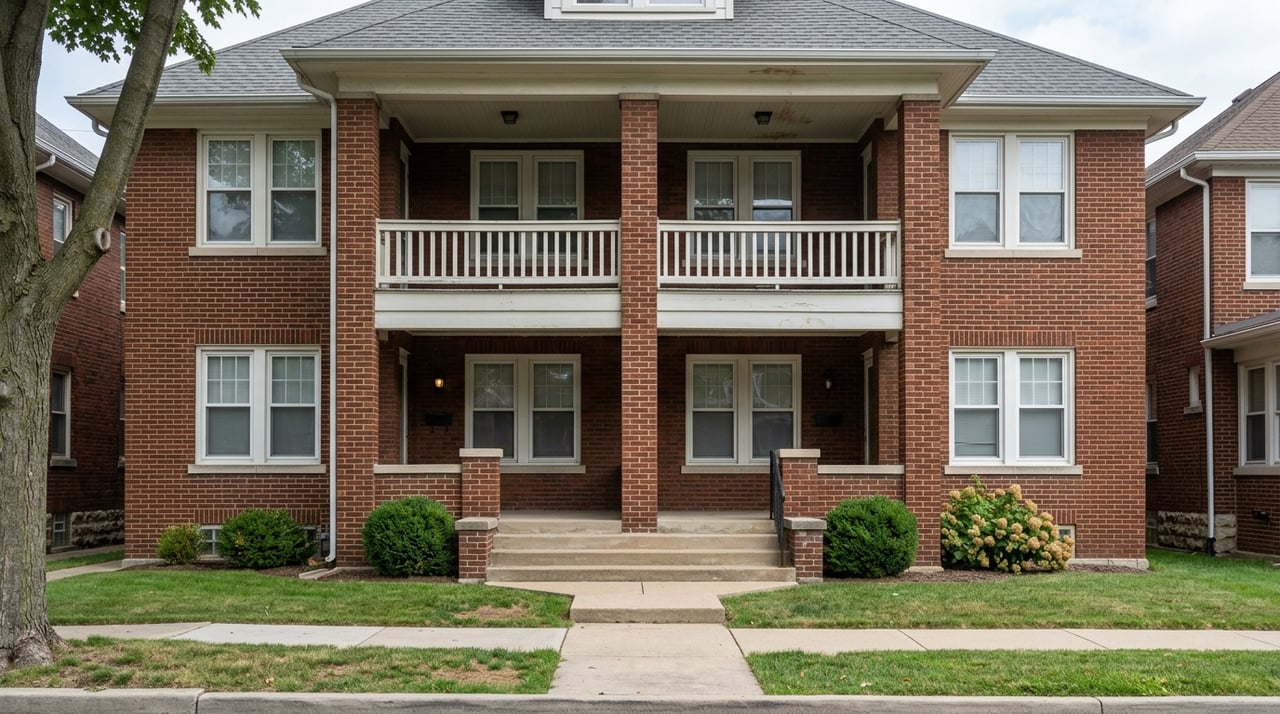
Cleveland Small Multifamily Investing Guide for Beginners
If you want to start investing in real estate without jumping straight into a large apartment building, Cleveland gives you a practical place to begin. The city has a deep supply of duplexes, triplexes, and fourplexes, but many of those properties are older and require careful review before you buy. In this guide, you’ll learn how small multifamily investing works in Cleveland, what to check before closing, and how to think through rents, financing, and compliance with fewer surprises. Let’s dive in.
Cleveland stands out as a true small-building market. According to the Cuyahoga County Planning data book, 21.5% of Cleveland housing units are in 2-4 unit properties. That is much higher than 10.9% in Cuyahoga County overall and 8.1% across Ohio.
That matters because it gives you more opportunities to find the kind of property many first-time investors want: a duplex, triplex, or fourplex that can produce rental income without the scale of a larger commercial asset. It also means these buildings are part of the city’s normal residential pattern, not a rare niche product.
Cleveland’s Form-Based Code treats duplexes, triplexes, and fourplexes as ordinary house-scale forms in many neighborhood contexts. For you as a buyer, that is helpful because these properties are woven into the city’s residential fabric and show up across many Cleveland neighborhoods.
One of the biggest realities in Cleveland investing is age. The same county planning report lists Cleveland’s median year built as 1923, compared with 1952 for Cuyahoga County.
That does not mean older properties are bad investments. It does mean you should expect many small multifamily buildings to need closer review of major systems and deferred maintenance.
When you evaluate a Cleveland duplex or fourplex, pay special attention to:
In older housing stock, condition can change your numbers fast. A property that looks attractive on paper may need significant repairs, while a well-maintained building with updated systems may justify stronger rent assumptions and lower near-term risk.
Before you buy a non-owner-occupied small multifamily in Cleveland, you should understand the city’s rental compliance requirements. These rules affect both your closing diligence and your ongoing operating costs.
The City of Cleveland requires annual rental registration for all non-owner-occupied residential properties. The fee is $70 per unit, and the property must have a Certificate Approving Rental Occupancy to be rented in good standing.
For many Cleveland investors, lead-safe compliance is also a major issue. The city states that rental units must meet lead-safe requirements, and properties built before 1978 need a Lead Safe Certificate in the rental file.
The city also notes that a rental property must be:
If the property has 4 or more units, Cleveland requires annual HVAC certification. If the owner pays utilities, a current utility statement is also required.
If you live outside Cuyahoga County or outside nearby counties recognized by the city, Cleveland says you may need a local agent-in-charge. And if a property is vacant, the city says you should use vacant property registration rather than rental registration.
In Cleveland, good investing often comes down to disciplined due diligence. Because many small multifamily properties are older, it is smart to look beyond cosmetic updates and confirm the basics.
A useful first step is reviewing permit history and code records. But you should not treat those records as complete proof that everything is fine. The city’s Records Administration office warns that permit history may be incomplete if prior work was done without permits, and a letter showing no violations does not automatically mean a property is free of issues.
That means your review should include both documents and physical condition. In practice, you want to confirm what was updated, when it was updated, and whether the work appears consistent with the age and condition of the building.
Here is a practical Cleveland due diligence checklist:
Property taxes deserve extra attention. The Cuyahoga County Treasury says real estate taxes are generally due twice a year, around the third Thursday of February and July. Before closing, you should confirm whether taxes are current, escrowed, or on any payment plan.
One of the easiest mistakes in small multifamily investing is using broad rent averages without checking the actual property. In Cleveland, that can create serious underwriting problems.
The research shows a wide spread in published Cleveland rent estimates. Zillow’s Cleveland market page reported an average rent of $1,209, while Redfin’s Cleveland rental market page showed $1,665 in August 2025, with neighborhood medians ranging from $875 in North Shore Collinwood to $1,719 in Ohio City. The takeaway is not that one source is right and another is wrong. The takeaway is that citywide averages can hide major differences from one property to the next.
Because of that spread, you should underwrite from local, unit-specific comps whenever possible. A renovated two-bedroom with off-street parking and separate utilities may perform very differently from an older unit with dated finishes and owner-paid utilities, even if both are in the same general area.
When you estimate rents, focus on the details that drive actual performance:
In Cleveland’s older housing stock, condition often matters more than an out-of-area buyer expects. Strong rent assumptions usually need support from real comparables, not just a metro average.
Your financing strategy should match your occupancy plan. That is especially important if you are deciding between house hacking and buying a pure rental property.
If you plan to live in one unit, FHA financing can be a common entry point. The Consumer Financial Protection Bureau says FHA loans allow down payments as low as 3.5%, and HUD guidance cited there includes 2-4 unit properties as eligible home types.
Conventional owner-occupant financing is also worth reviewing. Fannie Mae guidance says a buyer of a two- to four-unit principal residence generally must contribute 5% from their own funds, and eligible HomeReady borrowers may be able to go as low as 3% on a principal residence.
But the down payment is not the full cash picture. Freddie Mac’s homebuying guidance explains that if your down payment is under 20%, PMI usually applies, and closing costs typically add another 2% to 5% of the purchase price.
If you do not plan to occupy a unit, do not assume low-down-payment owner-occupant programs will fit the deal. For a true investment purchase, it is safer to compare lender terms, reserves, and cash-to-close requirements based on your actual plan.
If you are new to small multifamily investing in Cleveland, keep your first analysis simple. Focus on three questions:
If those three pieces line up, a small multifamily property can become a strong starting point. If one of them is off, the deal may still work, but only if the price and strategy leave room for the risk.
Cleveland has real advantages for small multifamily buyers, especially compared with markets where 2-4 unit properties are scarce. But the same things that create opportunity here, such as older housing stock and neighborhood-by-neighborhood rent variation, also make local guidance more valuable.
When you combine purchase guidance with financing clarity, you can move faster and ask better questions before you commit. That is especially helpful if you are balancing house-hack goals, investment returns, repair concerns, and city compliance requirements all at once.
If you are thinking about buying a duplex, triplex, or fourplex in Greater Cleveland, Charles Redmon can help you evaluate the property, review your financing options, and take the next step with a practical local strategy.


With over ten years of experience in the mortgage, real estate, and banking industry, I am knowledgeable, professional, and available to help you with all of your mortgage needs!

Charles Redmon
Address
6715 HANKEE ROAD
MANTUA OH 44255